Upstairs Leaks in Multifamily Units: A Safety-First Action Plan for San Diego Property Managers
When a leak in an upstairs unit sends water into the unit below — through a ceiling, a light fixture, or down a shared wall — it quickly becomes a two-unit problem. This article is a calm overview for San Diego property managers and multifamily operators: basic safety awareness, why water can affect more than what is visible, why documentation and professional assessment matter, and when to bring in a water damage restoration professional.
Who this is for and what problem it solves
This article is for local property managers and apartment operators who may encounter a leak affecting more than one unit. The goal is to help you recognize the situation, understand why it deserves prompt professional attention, and know when to contact Brothers. It is practical awareness, not a self-management guide, and it is not legal advice.
Basic safety awareness
A few safety points are worth keeping in mind any time water is near electrical systems. Water and electricity are a dangerous combination, and water traveling through ceiling fixtures, walls, and outlets is especially hazardous.
- If water is near electrical fixtures, outlets, or appliances, or running through a light fixture, keep residents clear and avoid touching switches or fixtures in the wet area. If you can safely reach the breaker panel and know which circuit serves the affected area, cutting power to those circuits is reasonable. If you are unsure or the panel is in a wet area, do not risk it — wait for qualified help.
- If a ceiling is sagging or bulging, it may be holding water. Keep people out from under it, since a saturated ceiling section can give way.
- Report the active leak promptly and move residents out of any room with water coming through the ceiling or standing water near electrical sources.
Beyond these basic safety steps, stopping the source, protecting belongings, and drying the affected materials are jobs for a plumber and a water damage restoration professional.
Why water can affect more than what is visible
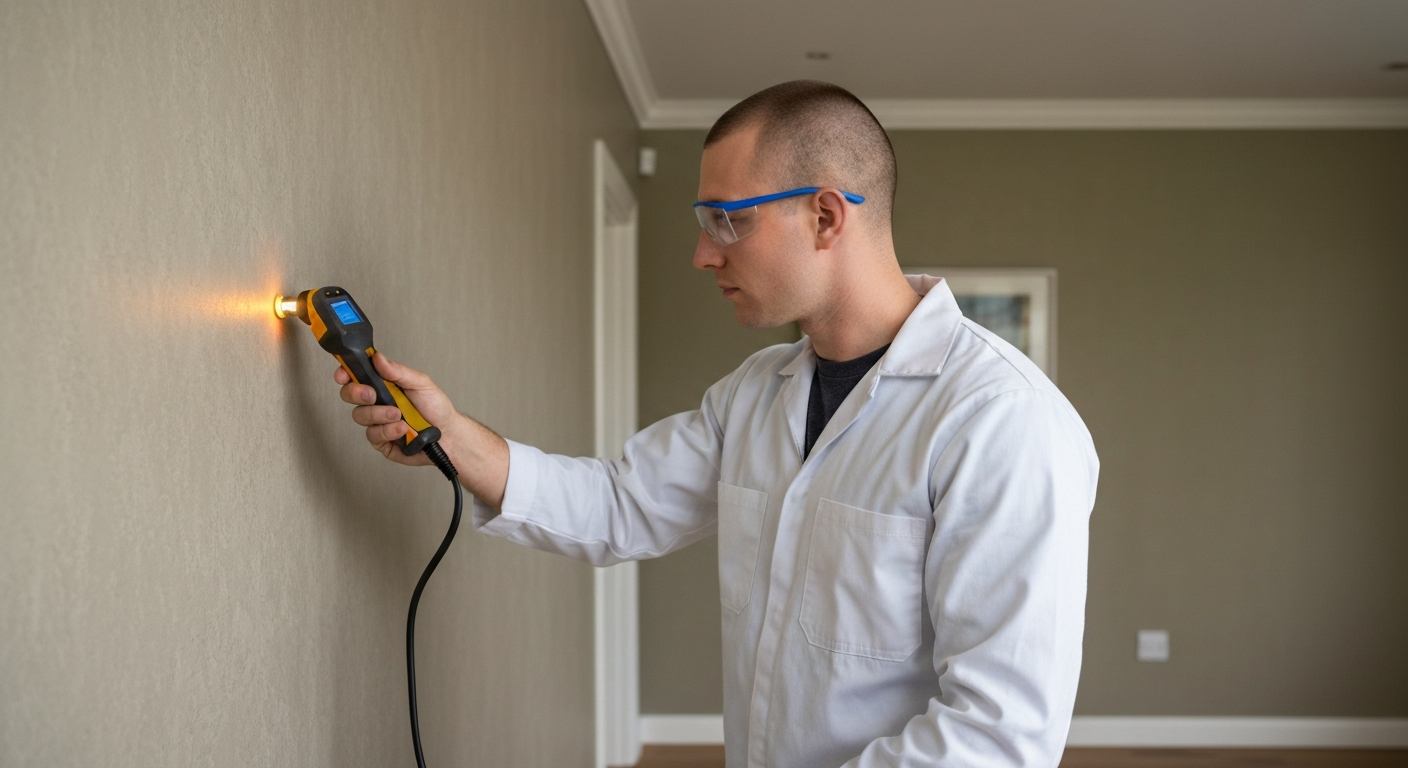
A common mistake is assuming a leak is handled once surfaces look dry. Water travels into wall cavities, under baseboards, into the carpet pad, and into the space between floors. Materials that look dry on the surface can still hold enough moisture to cause problems later. That hidden moisture is one of the main reasons a leak affecting two units should be assessed by a professional — they have the equipment and training to locate and dry moisture that is not visible.
Because water can move through shared structures, a single upstairs leak can involve the unit below and adjacent areas along the path the water traveled. The full extent is often not obvious from a visual check, which is why professional assessment matters.
Why documentation matters
Before anything is moved or dried, documenting the scene is valuable. Clear photos and video of the source, the path the water traveled, and the affected property in both units — along with notes on when you were notified and what you did — support insurance claims, owner reporting, and any later questions about what happened and when. Keep a simple log of who you contacted and at what time.
What a restoration professional assesses
A water damage restoration professional typically evaluates the full scope of affected materials — drywall, ceilings, insulation, subfloor, and carpet pad — and determines the right drying approach for the situation. That may involve extracting standing water, setting up drying equipment, and monitoring the affected materials until they reach an appropriate dry standard. The specific approach depends on what got wet, how much, and the building's construction.
It is broadly recognized in the restoration industry that acting quickly matters — the longer wet materials stay wet, the greater the risk of secondary damage. Rather than relying on a hard deadline, the practical takeaway is to start the professional response promptly when a leak has affected building materials in more than one unit.
When to contact Brothers
Reach out for water damage restoration when any of the following apply:
- Water has affected building materials — drywall, ceilings, insulation, subfloor, or carpet pad — in either unit.
- The leak ran for an unknown period, or the full extent of the wet area is not clear.
- Water came through a ceiling or wall assembly, where moisture is likely hidden inside the cavity.
- A musty or sour smell develops, or the affected area does not dry within a reasonable timeframe.
Brothers Carpet & Restoration offers water damage restoration across San Diego County, including water extraction and structural drying. For a leak that has affected multiple units, we can assess the situation and coordinate the drying work.
Dealing with a multifamily water emergency?
If a leak has affected units in your San Diego property, reach out. We can help assess the moisture and coordinate the drying and restoration work.