How San Diego Property Managers Handle Pet Odor in Vacant Units
Pet odor in a vacant unit is one of the most common — and most frustrating — problems a property manager faces at turnover. A lingering smell can delay a lease and lead to complaints from the next tenant. This guide walks through how to assess pet odor in a vacant San Diego rental unit, the difference between a surface issue and deeper contamination, and a practical decision process for cleaning, treatment, and when replacement may be necessary.
Who this is for and what problem it solves
This article is written for local property managers and multifamily rental operators handling vacant units where a previous tenant had pets. The goal is to help you figure out what you are actually dealing with — a cleanable surface odor or a deeper contamination problem — so you spend your turnover budget on the right fix instead of paying for cleaning that will not hold.
Why vacant units smell worse
When a unit is occupied, airflow from the HVAC system and everyday activity often keep pet odors at a low level. Once the unit is vacant and closed up, air stagnates and any remaining odor-causing residue becomes much more noticeable. Warmer weather and higher humidity — common in San Diego, especially in coastal and inland valleys — can intensify the smell as trapped residues release odor. This is why a unit that seemed fine at move-out can smell strongly by the time you show it.
Surface stain vs. deeper odor contamination
The single most important distinction is whether the odor is a surface issue or has gone deeper into the carpet system. They require very different responses.
Surface-level odor and staining means the contamination is mostly in the visible carpet fibers. This might be a recent accident, a small spot, or general soiling from a pet. These cases often respond well to professional hot water extraction combined with targeted treatment of the affected spots.
Deeper contamination means urine or odor-causing residue has penetrated past the fibers into the carpet backing and the pad below — and in serious cases, into the subfloor. When that happens, surface cleaning alone will not resolve the odor, because the source is underneath the carpet. The smell may fade after cleaning and return later, especially when the unit warms up.
What Brothers evaluates before recommending a solution
Rather than jumping straight to replacement — or assuming a standard cleaning will fix everything — the right solution depends on the condition of the unit. When we come out, we assess the carpet to figure out what we are actually dealing with before recommending cleaning, odor treatment, repair, or replacement.
Locating the affected areas
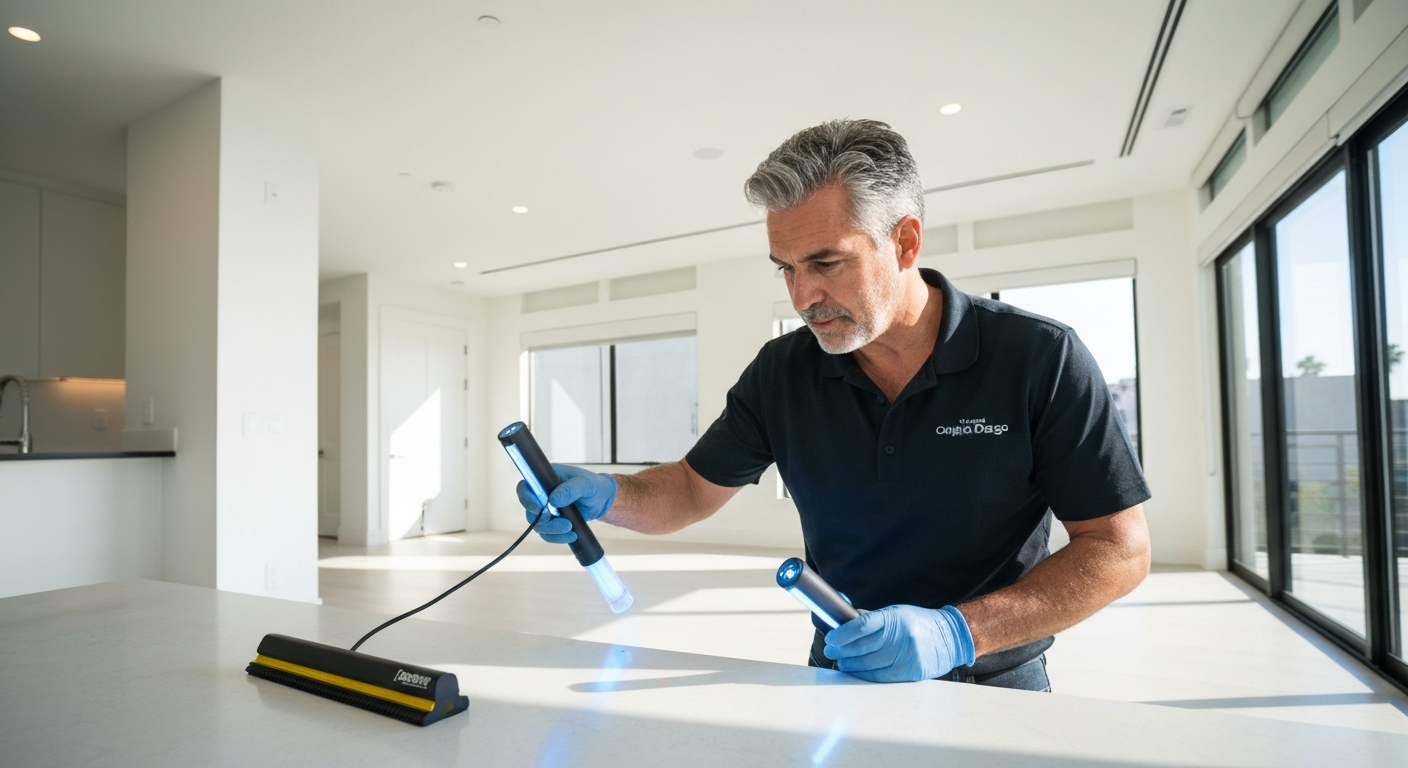
We start with a careful walk-through, noting where the smell is strongest and looking for visible stains, discoloration, or areas where a pet likely soiled repeatedly. We use UV inspection to help locate urine residue that is not visible to the eye — the salts in dried urine often fluoresce under UV light. This helps map the full affected area instead of just the spots you can see.
Assessing how deep the contamination goes
Based on the inspection, we form a working assessment of whether the problem is surface-level or has reached the pad and possibly the subfloor. Repeated soiling in the same spot, a strong smell that persists after the carpet surface looks clean, and soft or discolored areas are signs the contamination may be deeper. That assessment shapes what we recommend next.
Cleaning, treatment, or deeper work
For surface-level odor and staining, professional hot water extraction removes soil and residue from the fibers. For spots with urine contamination, we apply specialized enzymatic treatments designed to break down the odor-causing compounds at the source rather than mask them with fragrance. You can read more about our approach on our odor control service page.
When the inspection indicates the pad or subfloor is affected, surface cleaning alone is usually not enough. In those cases the carpet may need to be pulled back so the contaminated pad can be removed and the subfloor treated — for example, cleaned and, where appropriate, sealed with an odor-blocking primer before new pad and the original carpet are reinstalled. This is more involved than a standard cleaning, and it is the step that separates a real fix from a temporary one.
When replacement may be the better call
After cleaning and any deeper treatment, we reassess the unit. If the odor is gone and the carpet is in acceptable condition, the unit is ready to move forward. If the smell persists after treatment, or the carpet is also physically damaged — heavily stained, delaminating, or worn out — replacement may be the more practical option. The goal is to give you a clear, honest basis for that decision rather than replacing carpet that could have been saved, or paying for cleaning that will not hold.
On guarantees and realistic expectations
We want to be straightforward: pet odor removal is not always simple, and outcomes depend on how deep the contamination goes and how long it has been present. We do not promise that every odor can be permanently removed through cleaning alone. What we do promise is an honest assessment — we will tell you whether we believe the odor can be addressed through treatment, whether the pad or subfloor needs attention, or whether replacement is the better call. That honesty protects you from paying for a fix that will not last.
Documenting the unit for your records
Whatever path you take, document the unit's condition before and after. Photos of stains and affected areas, notes from the inspection, and a record of the work performed all support your file on the unit — useful for owner reporting and for any questions about the previous tenant's deposit. If the carpet ultimately needs replacement, having a documented assessment that cleaning and treatment were attempted provides a clearer record of why that decision was made.
Have a vacant unit with pet odor?
If you manage rental units in San Diego County, reach out for an honest assessment of the odor and what it will take to address it.
Call 619-279-7357